
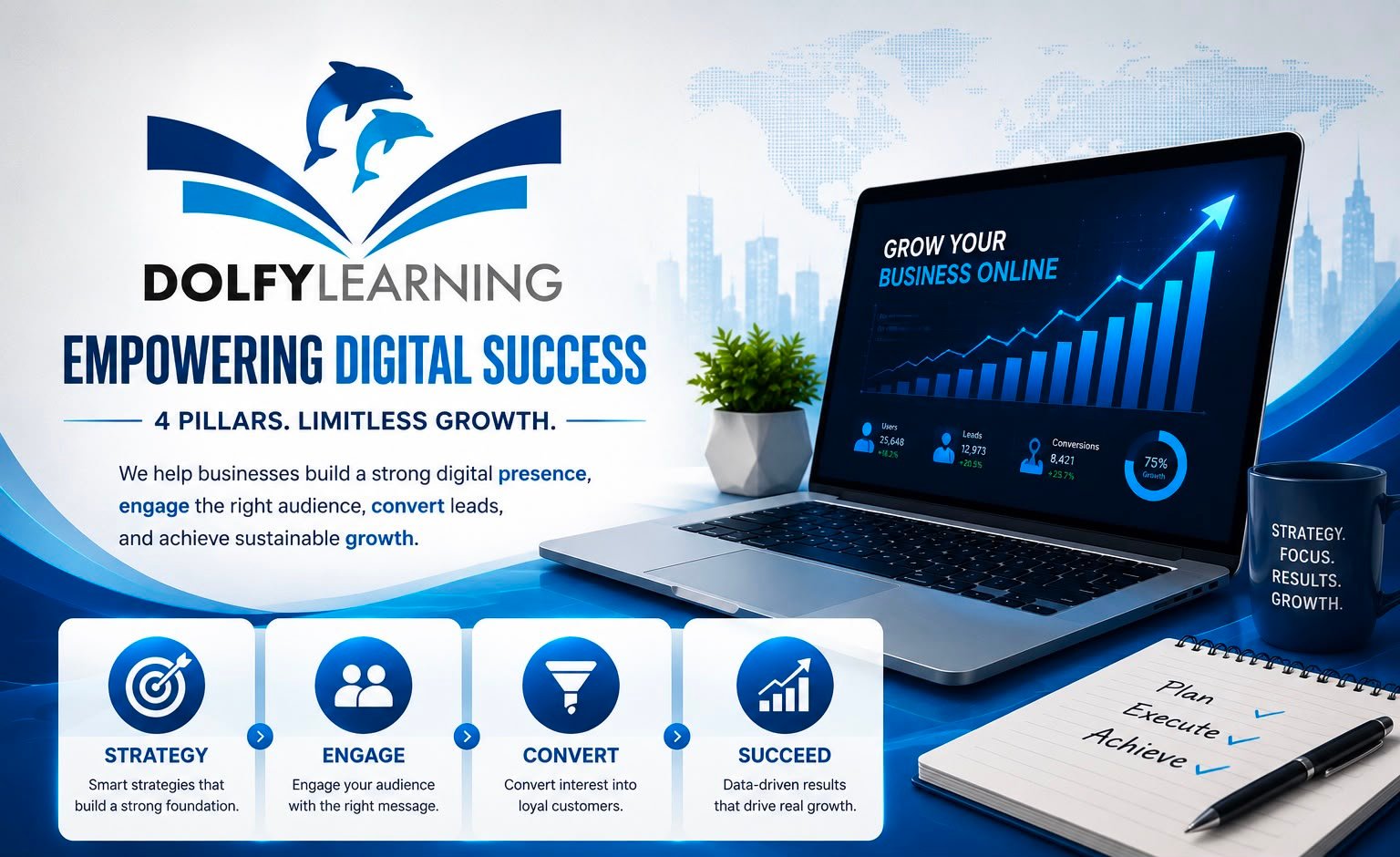
In today’s world of competition in the digital arena, just having a website or a social media account will not be sufficient. Every organization requires a strategic digital marketing plan to attract, engage and convert clients on a regular basis. The key to success is to know about and practice the four pillars of digital marketing.
The four pillars are the foundation of every successful digital marketing campaign. Irrespective of whether you are a startup, a small organization, or a big company, these four pillars can help you improve your online presence and increase your leads and sales.
This article will give you an insight into the 4 pillars of digital marketing and how to use them effectively.
What Are the 4 Pillars of Digital Marketing?
The four pillars of digital marketing are:
- Search Engine Optimization (SEO)
- Content Marketing
- Social Media Marketing (SMM)
- Paid Advertising (PPC)
Each pillar serves a unique purpose, but together they create a powerful marketing ecosystem that drives sustainable business growth.
Why Are the Four Pillars Important?
It isn’t simply about publishing content on social networks or using Google ads. If your strategy is not properly balanced, you will be wasting your time and money on useless campaigns.
The four pillars help businesses:
- Increase online visibility
- Build brand credibility
- Generate qualified leads
- Improve customer engagement
- Drive website traffic
- Boost conversions and revenue
- Create long-term business growth
When these pillars work together, they create a complete customer journey—from awareness to purchase and beyond.
Pillar 1: Search Engine Optimization (SEO)
What is SEO?
SEO stands for Search Engine Optimization and refers to improving your website in order to make it rank higher on Google and other search engines.
When people who might be interested in the products or services that your company offers search online, they can find you through organic searches.
Why SEO Matters?
Over 90 percent of all web searches start with a search engine. Being on the first page of Google search results enhances your chances of having quality traffic.
Benefits of SEO include:
- Higher organic traffic
- Increased credibility
- Better user experience
- Long-term marketing ROI
- Higher conversion rates
Types of SEO
On-Page SEO
This includes optimizing:
- Title tags
- Meta descriptions
- Header tags
- Internal linking
- Image optimization
- Keyword placement
Off-Page SEO
Off-page SEO focuses on:
- Backlinks
- Brand mentions
- Guest posting
- Digital PR
Technical SEO
Technical SEO includes:
- Website speed
- Mobile responsiveness
- Secure HTTPS
- XML sitemap
- Structured data
- Crawlability
Best SEO Practices
- Target relevant keywords
- Publish high-quality content
- Improve page loading speed
- Optimize for mobile users
- Build authoritative backlinks
- Regularly update old content
SEO is a long-term investment that continuously generates qualified traffic.
Pillar 2: Content Marketing
What is Content Marketing?
Content marketing refers to the creation and distribution of relevant and valuable content that helps attract and keep an identifiable audience.
It does not sell anything but serves educational purposes instead.
Why Content Marketing is Important?
Consumers prefer learning about a company through helpful content instead of advertisements.
Benefits include:
- Builds authority
- Improves SEO
- Generates leads
- Increases engagement
- Nurtures customer relationships
- Supports every stage of the buyer journey
Types of Content Marketing
Blog Articles
Blogs are helpful in answering customer queries and improving organic ranking.
Videos
Marketing through videos engages customers and also helps explain things better.
Infographics
Infographics are visual aids which make things easy and shareable.
Case Studies
It is important to showcase success stories of customers.
Email Newsletters
Make your customers aware with newsletters consisting of useful promotions.
E-books & Guides
In-depth material for obtaining customers’ contact details.
Content Marketing Best Practices
- Focus on solving customer problems
- Publish consistently
- Research keywords before writing
- Add visuals
- Include clear calls-to-action
- Repurpose content across platforms
Great content becomes the foundation of every digital marketing strategy.
Pillar 3: Social Media Marketing (SMM)
What is Social Media Marketing?
Social media marketing involves promoting your brand through platforms like:
- X (Twitter)
- YouTube
- TikTok
The goal is to build relationships, increase brand awareness, and drive traffic.
Why Social Media Matters
Billions of users spend hours daily on social media.
Businesses use these platforms to:
- Connect with audiences
- Build communities
- Increase engagement
- Promote products
- Generate website traffic
- Improve customer support
Key Social Media Strategies
Brand Awareness
Regular posts will create awareness about your brand.
Interact With Followers
Respond to comments and messages to establish trust.
Provide Valuable Information
Educational information performs better than promotional material.
Create Short Videos
Short videos get more engagement compared to long videos.
Collaboration with Influencers
Influencers assist brands to reach target audiences.
Social Media Best Practices
- Create a content calendar
- Maintain consistent branding
- Use relevant hashtags
- Analyze performance metrics
- Post regularly
- Encourage user-generated content
Social media isn’t just about followers—it’s about meaningful engagement.
Pillar 4: Paid Advertising (PPC)
What is Paid Advertising?
Paid advertising allows businesses to promote products or services through paid campaigns.
Popular advertising platforms include:
- Google Ads
- Facebook Ads
- Instagram Ads
- LinkedIn Ads
- YouTube Ads
- Microsoft Ads
Businesses pay only when users interact with their advertisements.
Benefits of Paid Advertising
Unlike SEO, PPC delivers immediate visibility.
Advantages include:
- Instant traffic
- Precise audience targeting
- Measurable ROI
- Faster lead generation
- Budget flexibility
- Scalable campaigns
Types of Paid Advertising
Search ads
Are displayed on the search engine results pages of Google.
Display ads
Are banner ads that are seen on multiple sites.
Social media ads
Are advertised to people who have certain interests, demographics, ages, and behaviors.
Video ads
Are seen before or along with videos.
Shopping ads
Work best for e-commerce businesses with products to sell.
PPC Best Practices
- Define campaign goals
- Use compelling ad copy
- Optimize landing pages
- Track conversions
- Test multiple ad variations
- Monitor Quality Score
Paid advertising works best when combined with SEO and content marketing.
How the Four Pillars Work Together
Companies usually pay attention to just one marketing platform.
But the true strength lies in integration of all four pillars.
For example:
Search engine optimization pulls organic traffic.
Content teaches and creates trust.
Social media boosts engagement.
Advertising drives rapid growth.
These pillars altogether make a perfect digital marketing funnel.
Common Mistakes Businesses Make
Ignores SEO
When SEO is ignored, the site can’t be found easily.
Puts Up Poor Quality Content
Poor quality or duplicate content won’t do well.
Irregular Social Media Updates
If posts are made only once a month, you will not develop a strong following.
Does Not Use Paid Advertising Wisely
If paid advertising doesn’t have a defined goal, you will end up wasting your money.
Doesn’t Monitor the Outcomes
If there’s no monitoring, marketing can’t be optimized.
Measuring Success Across the Four Pillars
Successful digital marketing requires continuous measurement.
Important metrics include:
SEO Metrics
- Organic traffic
- Keyword rankings
- Backlinks
- Click-through rate
Content Marketing Metrics
- Page views
- Time on page
- Bounce rate
- Lead generation
Social Media Metrics
- Reach
- Engagement
- Shares
- Followers
- Clicks
Paid Advertising Metrics
- Cost per click (CPC)
- Conversion rate
- Return on ad spend (ROAS)
- Cost per acquisition (CPA)
Using analytics tools like Google Analytics and platform-specific dashboards helps refine your strategy over time.
Future Trends in Digital Marketing
As technology evolves, businesses should also adapt.
Emerging trends include:
- AI-powered marketing
- Voice search optimization
- Video-first content
- Personalization
- Marketing automation
- First-party data strategies
- Interactive content
- Conversational AI
Businesses that embrace these innovations will remain competitive in the digital landscape.
Conclusion
The Four Pillars of Digital Marketing – SEO, Content Marketing, Social Media Marketing, and Paid Advertising – make up the bedrock of any successful digital marketing strategy.
Each one of the pillars serves its own purpose:
SEO drives organic traffic.
Content Marketing establishes credibility.
Social Media Marketing fosters strong customer connections.
Paid Advertising gives immediate visibility and scalability.
Instead of depending on a particular form of marketing, companies need to combine all four pillars to formulate an effective marketing strategy. The four pillars combined result in a complete system that enables companies to attract qualified traffic, engage their audience, generate leads, and grow their businesses.
For both new and established businesses, making an investment in these four pillars is essential for success in today’s modern age of marketing.
Frequently Asked Questions (FAQs)
What are the 4 pillars of digital marketing?
There are four key pillars of digital marketing that include SEO, Content Marketing, SMM, and PPC. In collaboration, they make up an effective strategy for attracting customers.
Which digital marketing pillar is the most important one?
No pillar can be called the most important one. SEO provides you with the organic traffic; content marketing increases trust in your company; SMM is responsible for engagement, and PPC helps you receive quick results.
Can small businesses make good use of these four pillars?
Yes. Small companies can implement all the four pillars in order to become more visible and competitive against larger companies.
How long does it take to receive digital marketing results?
In case of paid advertising, results are received almost instantly, but SEO and content marketing require at least several months to bring results.
What is the greatest error when it comes to digital marketing?
One of the greatest errors is being dependent on one channel. The combination of SEO, content marketing, social media, and paid marketing results in a better digital marketing strategy.
<script type="application/ld+json">
{
  "@context": "https://schema.org",
  "@type": "FAQPage",
  "mainEntity": [{
    "@type": "Question",
    "name": "What are the 4 pillars of digital marketing?",
    "acceptedAnswer": {
      "@type": "Answer",
      "text": "There are four key pillars of digital marketing that include SEO, Content Marketing, SMM, and PPC. In collaboration, they make up an effective strategy for attracting customers."
    }
  },{
    "@type": "Question",
    "name": "Which digital marketing pillar is the most important one?",
    "acceptedAnswer": {
      "@type": "Answer",
      "text": "No pillar can be called the most important one. SEO provides you with the organic traffic; content marketing increases trust in your company; SMM is responsible for engagement, and PPC helps you receive quick results."
    }
  },{
    "@type": "Question",
    "name": "Can small businesses make good use of these four pillars?",
    "acceptedAnswer": {
      "@type": "Answer",
      "text": "Yes. Small companies can implement all the four pillars in order to become more visible and competitive against larger companies."
    }
  },{
    "@type": "Question",
    "name": "How long does it take to receive digital marketing results?",
    "acceptedAnswer": {
      "@type": "Answer",
      "text": "In case of paid advertising, results are received almost instantly, but SEO and content marketing require at least several months to bring results."
    }
  },{
    "@type": "Question",
    "name": "What is the greatest error when it comes to digital marketing?",
    "acceptedAnswer": {
      "@type": "Answer",
      "text": "One of the greatest errors is being dependent on one channel. The combination of SEO, content marketing, social media, and paid marketing results in a better digital marketing strategy."
    }
  }]
}
</script>
Add a Comment